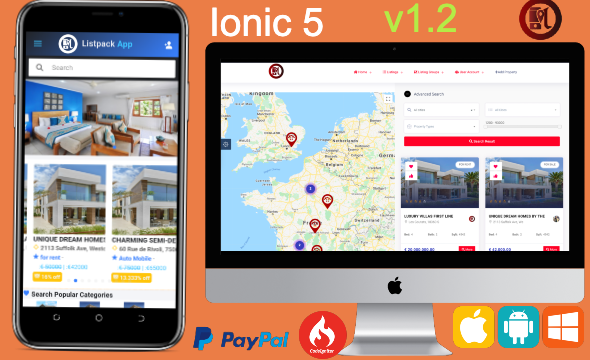
Listpack Ionic 5 Classified Ads Android + IOS + Frontend + Backend
Description
Backend, Frontend, Android & IOS , All In one for just $30 Check Demo Here
Play store

Listpack has ANDROID, IOS and backend and front developed in codeigniter and MySQLi List Pack was developed using Ionic 4 framework and Angular Js. The backend was built using codegniter and MySQLi . Note: Listpack will require some knowledge of Ionic 4, Angular js , PHP and MYSQLi . The Mobiles part will also require knowledge of android studio for android app and Xcode for Ios app.
Contact Support
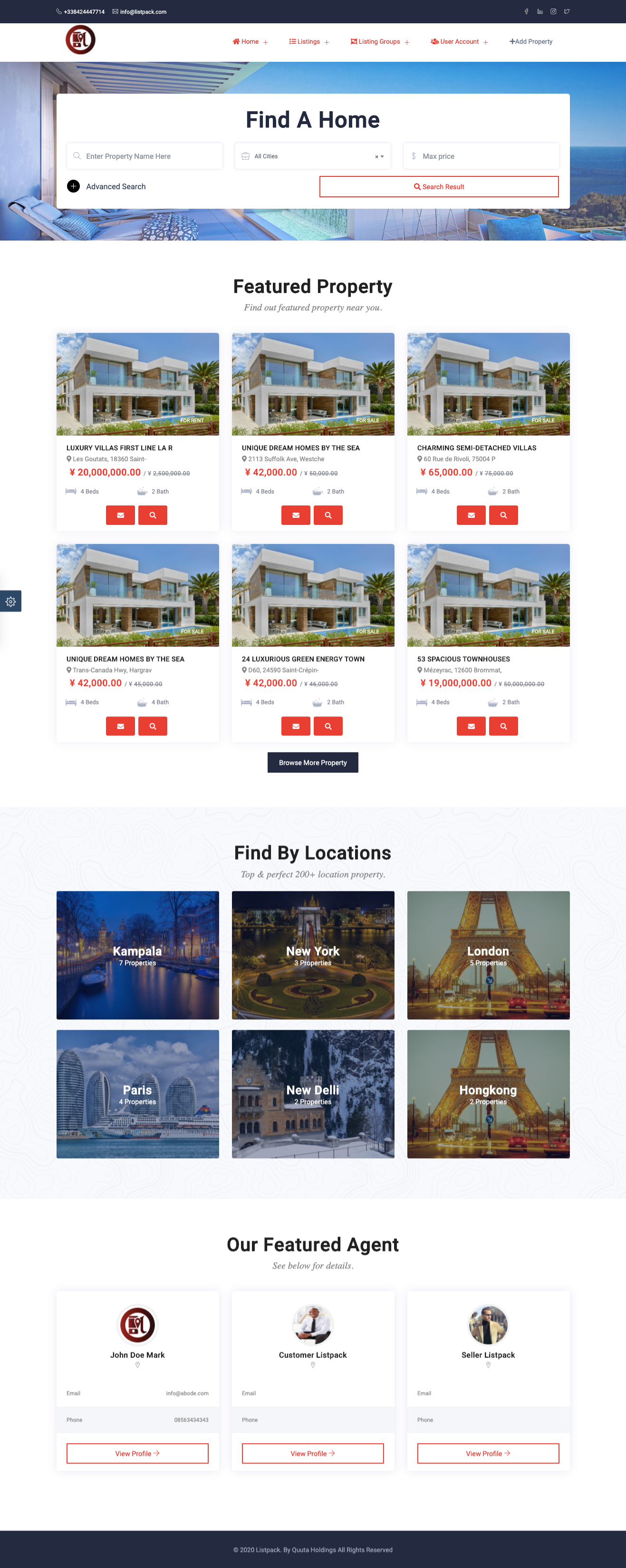
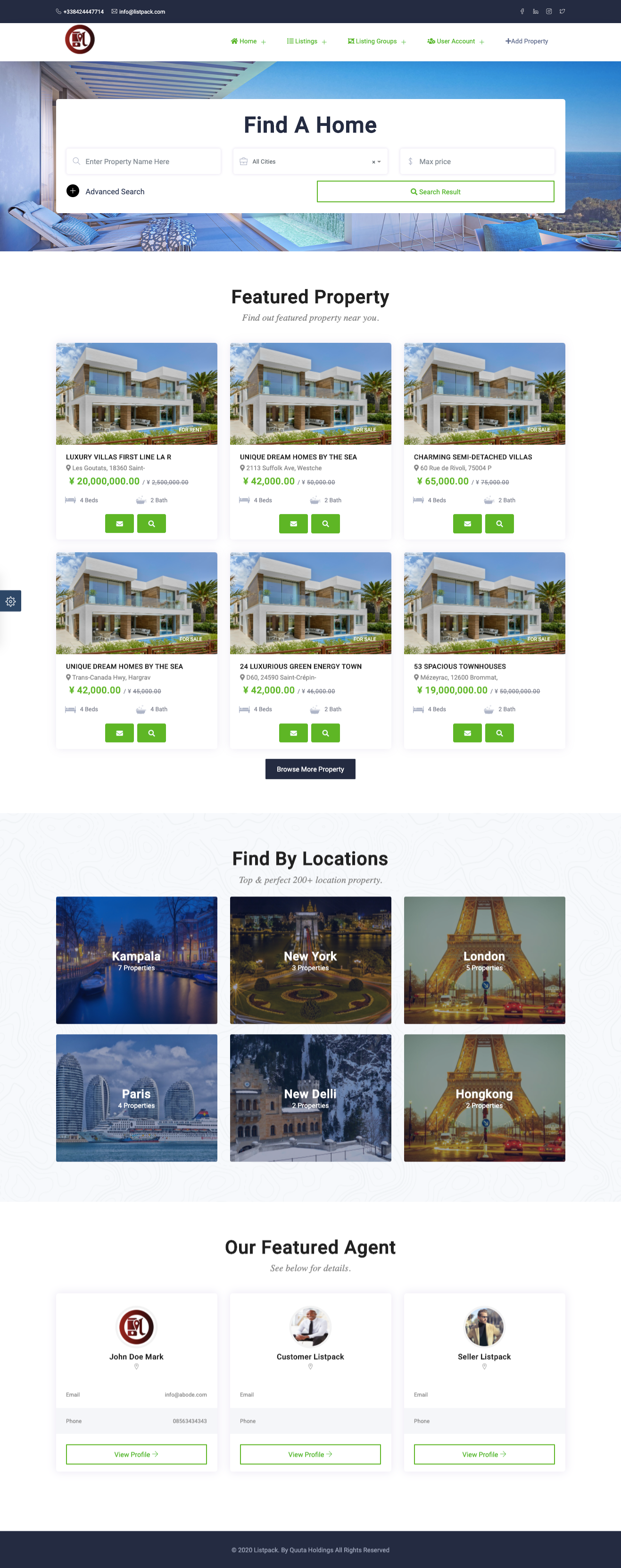
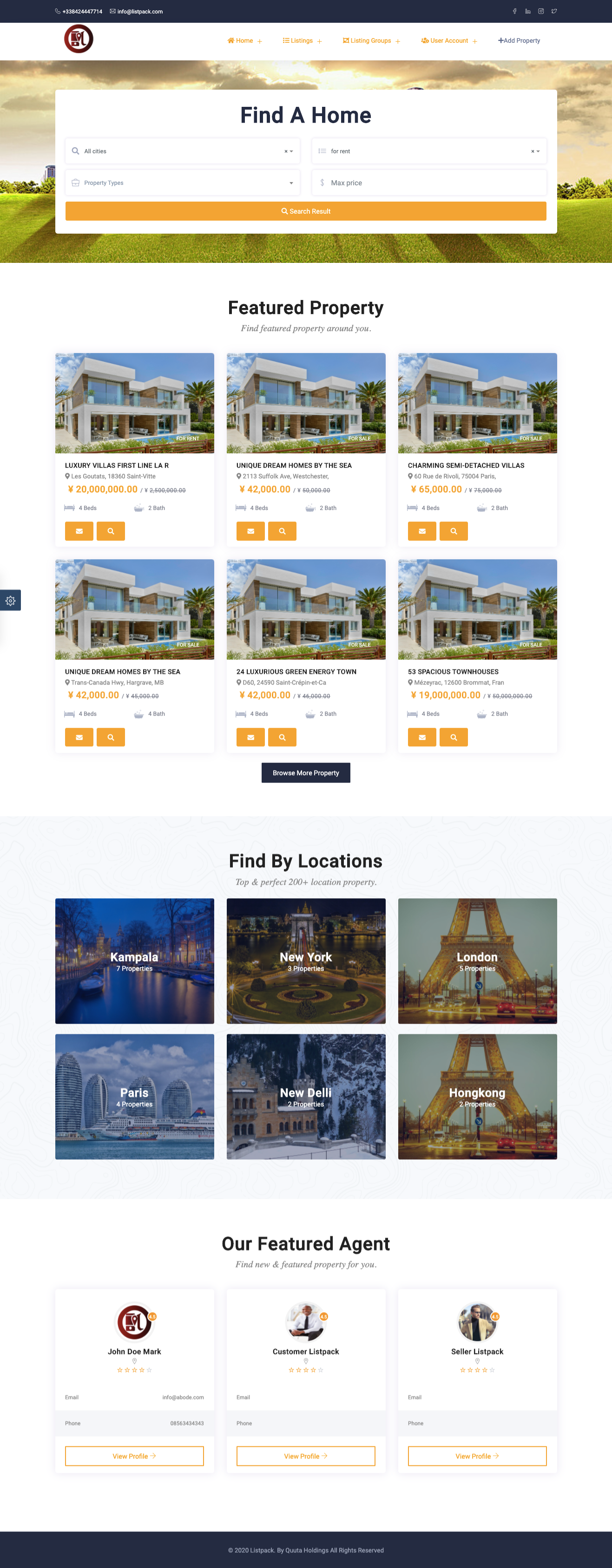
quutaholdings@gmail.comFront & Back end Screen shots
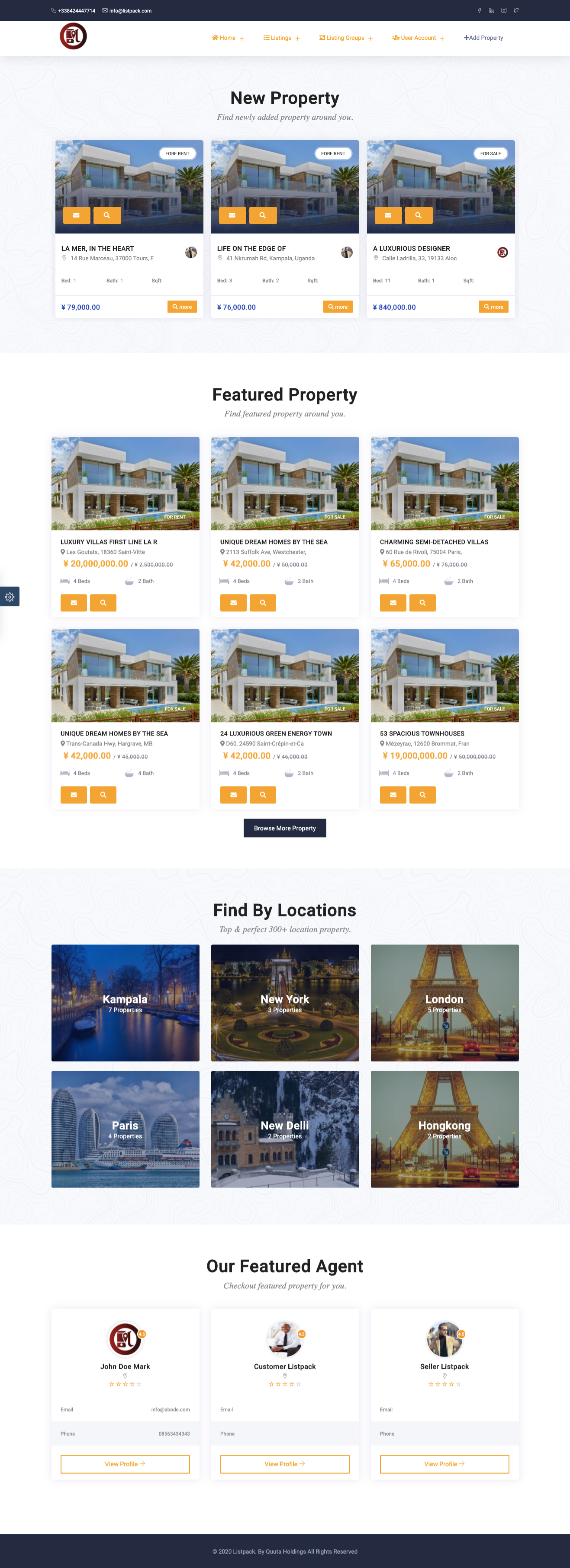
Mobile Screen shots
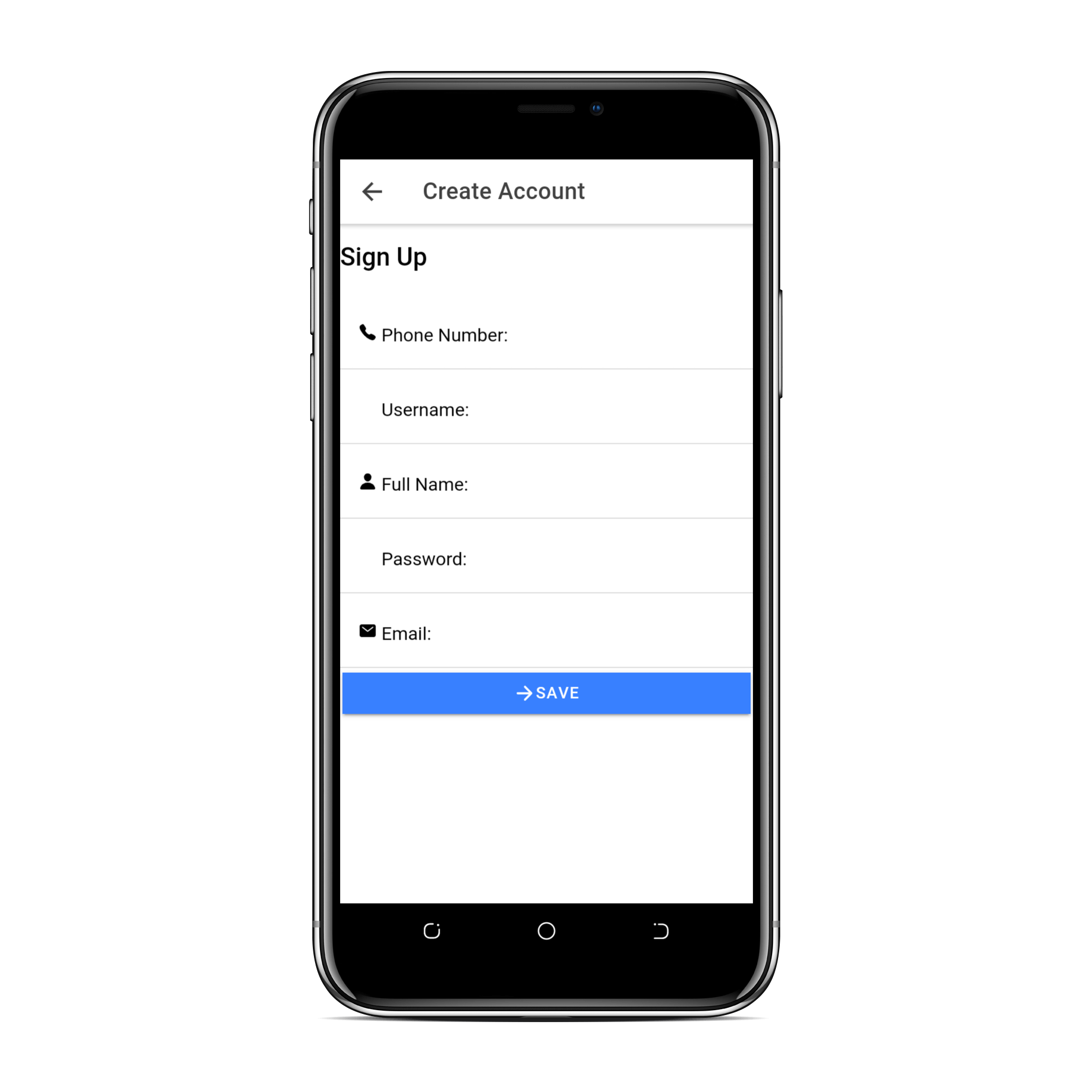

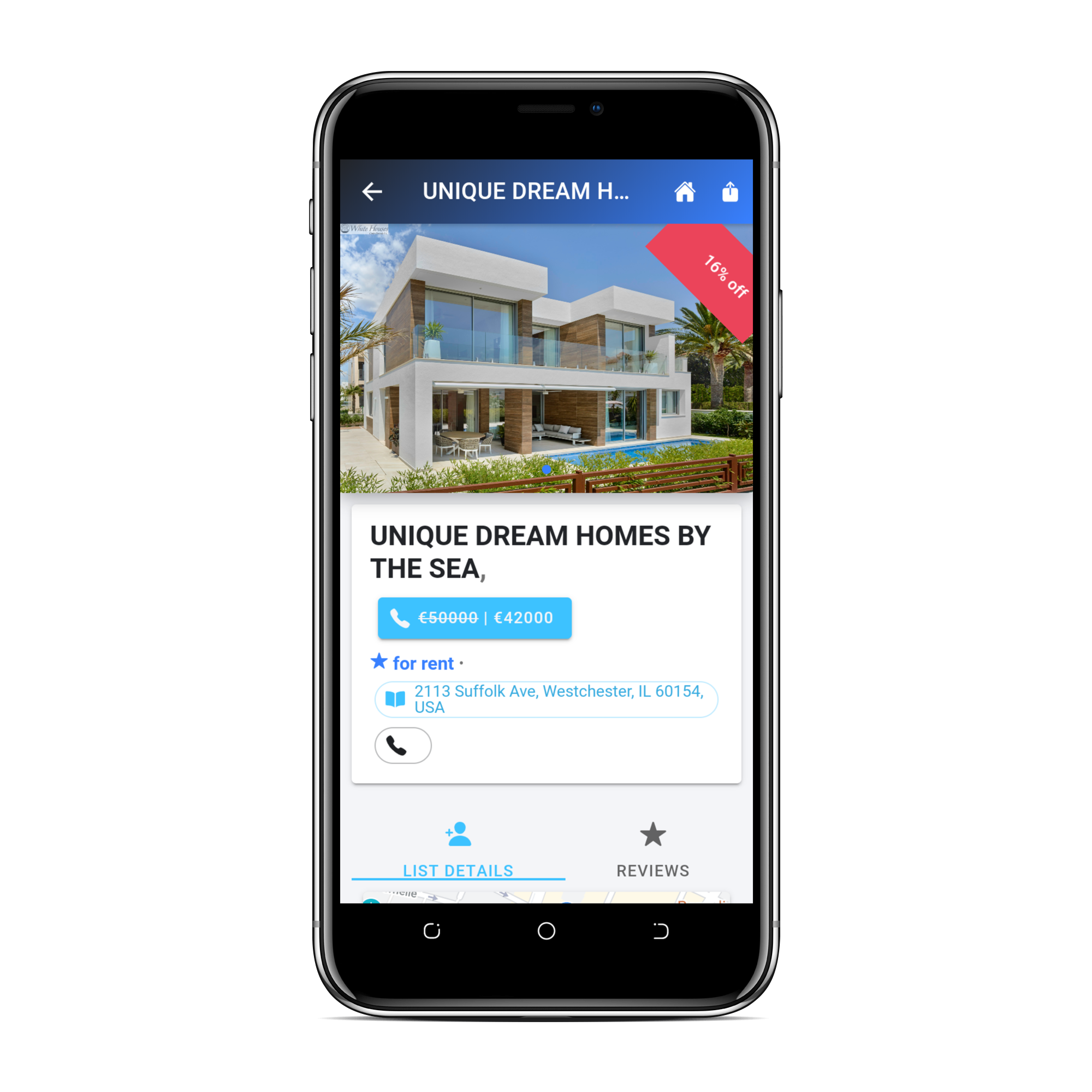
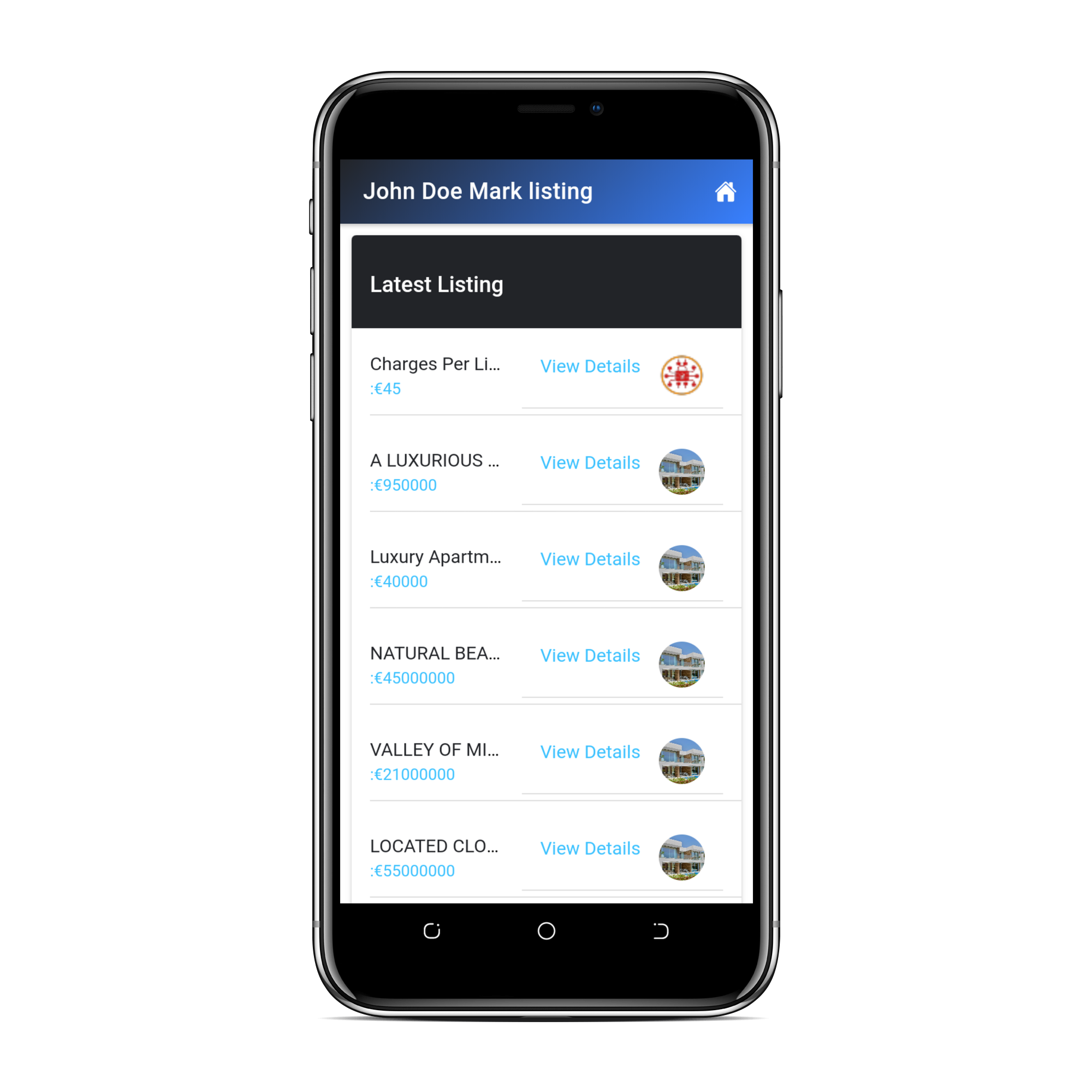
FRONT END ACCESS
Front end Demo Here
BACKEND AUTHENTICATION CREDENTIALS
Back end Demo Here
<h> 1. Administrator Username: admin Password: 123456 2. Vendor access Username: seller Password: 123456 3. Customer access Username: customer Password: 123456Main Features • Has both IOS and Android • Add listing by both mobile and backend • Order management both mobile and backend • Listing services • Three user roles (customer, vendor and admin). • Firebase phone authentication with MySQLi storage • Quick search option on home page • Auto detects location address • Category wise directory browsing • Nearest listings browsing • Map wise listing browsing • Location based browsing • Advanced listings, categories, services and order management • Multiple image upload for each listing • Customer reviews and rating • Customer can directly contact vendor by either, phone or email • Customers can place order directly to vendor who can accept it or reject it • Dynamic content management in both dashboard and mobile
Updates 13-04-2020
1. Migrated From ionic 4 to 5 2. Added currency 3. improved queries 4. Fixed Bugs 5. Updated Locations and category issuesUpdates 23-01-2020
1. Pay per Listing 2. Added settings for pay per listing 3. Color themes are dynamically saved and picked from database now 4. Fixed Bugs 5. Updated Locations 6. All locations and categories are accessible 7. Fixed bugsUpdates 31-01-2020
1. upgraded from angular 7 to 8. 2. Added edit and delete options for payment packages 3. Fixed errors on mobile compilations for some phones 4. Fixed Bugs 5. Removed default login on app and added it only when placing order and adding listingCategories
Tags
External listing. code.market does not sell this product and does not process payment for it. Pricing, payment, delivery, licensing, refunds, and support are handled by the third-party merchant on its own website. We may earn an affiliate commission from a referral. Details.
Products of the Week.
Submit#1

wanapi.app
Wan API is a developer platform for the Wan video model family. Compare Wan 3.0, Prime and Pro specifications and prices, then prepare a request in the preview playground.
Other · 8,073 views · 20 clicksOther · Week 42 · 8,073 views · 20 clicks
#2

wanapi.ai
Wan API is a developer platform for the Wan video model family. Compare Wan 3.0, Prime and Pro specifications and prices, then prepare a request in the preview playground.
Other · 7,422 views · 11 clicksOther · Week 42 · 7,422 views · 11 clicks
#3

yee.site
Your link in bio, but a real website. Start from beautiful templates and ready-made sections, then add a shop, bookings, a blog and as many pages as you need. Perfect for your link in bio, portfolio or personal site.
Other · 13,496 views · 22 clicksOther · Week 42 · 13,496 views · 22 clicks
#4

upvote.club
Free Social Media Engagement that Helps Boost Your Content. Upvote Club supports 19 social networks with 100+ engagement actions in one dashboard. Add links to your posts and get free engagement from real users.
SaaS · 34,397 views · 104 clicksSaaS · Week 42 · 34,397 views · 104 clicks
#5

Seenshot App
Free, Fast, MacOS Screenshot app. Make Screenshot cmd+shift+2 and send it via link
Desktop App · 22,890 views · 114 clicksDesktop App · Week 42 · 22,890 views · 114 clicks
#6

Conversational Backlinks for Busy Founders
Place Backlink Relevant Conversation for your domain across Forums and Conversations
Website · 34,667 views · 204 clicksWebsite · Week 42 · 34,667 views · 204 clicks
#7

Substack Posting API
Onboard your Agent to Substack. Write Publish on Substack via API
SaaS · 53,535 views · 190 clicksSaaS · Week 42 · 53,535 views · 190 clicks
#8

codester.com
SocialDesk+: Omnichannel Social Commerce & Business Management Platform This is stronger than simply “Social Commerce and Messaging” because it tells buyers this is a complete business platform, not just a messaging script. Turn Social Conversations Into Sales SocialDesk+ is a complete omnichannel social commerce and business management platform built for businesses that sell and communicate with customers through social media. Instead of switching between WhatsApp, Facebook, Instagram and TikTok, businesses can manage customer conversations, comments, products, leads, follow-ups, automation, teams and business reports from one professional workspace. And because the full source code is included, developers, agencies and entrepreneurs can customize, rebrand and launch SocialDesk+ as their own business solution or SaaS platform. 🚀 Build Your Own Social Commerce Business SocialDesk+ gives you the foundation to launch: - Your own SaaS platform - A white-label social CRM - A social-commerce management system - A customer communication platform - A business messaging solution - A custom solution for clients - A multi-business subscription platform 💬 Connect Your Customers Supported social channels include: WhatsApp • Facebook • Instagram • TikTok Bring supported conversations into one centralized workspace and help businesses respond faster without constantly switching between platforms. 🛍️ More Than a Messaging Platform SocialDesk+ combines communication with the tools businesses need to manage customer opportunities: Inbox Manage customer conversations from connected channels. Comments Monitor and respond to social-media comments. Customers & Leads Organize customer information and potential buyers. Products & Catalog Manage products and give your team quick access to product information. Follow-Ups Make sure potential customers don't get forgotten. Automation Automate repetitive customer questions and responses. AI Assistant Provide AI-assisted communication when configured. Team Management Give managers and staff access to the business workspace. Reports & Analytics Track activity using business reports and analytics. The current product listing already includes these capabilities. 🔥 Why Buyers Will Want It Launch Faster Start with an already-built business platform instead of developing the entire system from zero. Customize Everything The full source code is included, allowing developers to change branding, features, workflows and integrations. Build a SaaS Create multiple business workspaces and offer SocialDesk+ as a subscription-based service. Sell to Businesses Offer it to retailers, restaurants, service businesses, online sellers, agencies and other businesses that communicate with customers through social media. Mobile + Web + Backend This isn't just a mobile UI template. It includes: - Flutter mobile application - Python / FastAPI backend - Web interface - Administration tools - Database infrastructure - API-based architecture - SQLite / PostgreSQL support - Android and iOS project structure 💼 One Platform. Multiple Business Opportunities. For SaaS Entrepreneurs Launch your own subscription platform and allow multiple businesses to operate inside separate workspaces. For Software Agencies Customize and rebrand the platform for clients instead of building an omnichannel business system from scratch. For Developers Use the complete source code as a foundation for your own social-commerce or customer-management product. For Businesses Deploy a dedicated version for your own customer-service and social-commerce operations. 🧩 What's Included Mobile - Flutter / Dart - Android - iOS project Backend - Python - FastAPI - SQLAlchemy - Alembic Database - SQLite - PostgreSQL Web - HTML5 - CSS3 - JavaScript Deployment - Docker - Docker Compose - Production configuration Business Platform - Multi-workspace architecture - Authentication - Teams - Customers - Products - Messaging - Comments - Automation - Reports - Subscriptions - Administration The current listing also documents third-party integrations such as Meta, TikTok, Stripe, Firebase, SMTP and optional OpenAI configuration. ⚡ What Makes SocialDesk+ Different? You're not buying a simple: ❌ Chat UI ❌ WhatsApp clone ❌ Flutter template ❌ Admin dashboard ❌ Basic CRM You're getting a complete business platform foundation that can be customized, branded and commercialized. Connect. Automate. Manage. Grow. SocialDesk+ Omnichannel Social Commerce & Business Management Platform One important change I'd make to the current listing The current page starts with: “A simple guide to managing your social conversations, customers, products and business activity.”
Other · 20,907 views · 35 clicksOther · Week 42 · 20,907 views · 35 clicks
#9

sandbook.app
Sandbook reads EPUB, PDF, web pages and scanned pages aloud with Kokoro TTS, an open neural voice model that runs on your iPhone, free and offline. Choose from 41 natural voices in English, Spanish, French, Italian, Brazilian Portuguese and Hindi and follow each word as it is spoken. Try the same voices in your browser first with the free Kokoro TTS online demo.
Other · 20,816 views · 17 clicksOther · Week 42 · 20,816 views · 17 clicks