
Most resume advice starts with a formula: action verb, task, result. That formula helps, but it can also produce polished duty lists that still fail to prove value. Strong resume bullet points are miniature business cases. They identify what you changed, show the scope or method, and connect your work to an outcome a hiring manager can understand.
That distinction matters because the typical resume leaves a large amount of evidence unused. A study of more than 1,200 real resumes found a median of 37 bullet points per resume, yet only 4.4% of bullets contained a number or measurable outcome. The same dataset found that 29.1% of resumes had no quantified bullet at all, according to ResumeAtlas's resume insights. For developers, freelancers, agencies, and digital product teams, that gap is a serious opportunity.
The examples below use Code Market-style work across taxonomy, pricing, catalog growth, templates, content, quality assurance, recommendations, and SEO. Any figures shown inside the examples are placeholders. Replace them with verified personal results, not numbers that merely sound impressive.
Each example uses five tests: action, context, evidence, impact, and keyword alignment. You'll see how seniority and job function change the best wording, then learn how to tailor bullets, quantify work accurately, choose stronger verbs, improve ATS alignment, and complete a final editing pass.
Table of Contents
- 1. AIApply
- 2. Increased Catalog Discoverability Through Taxonomy Optimization
- 3. Revenue, Conversion and Pricing Optimization
- 4. Expanded Product Catalog Coverage and Vertical Market Penetration
- 5. Reduced Time-to-Market for Customers Through Ready-Made Starter Templates
- 6. Improved Customer Retention and Lifetime Value Through Content and Support Resources
- 7. Enhanced Product Quality and Developer Confidence Through Code Auditing and Vetting Processes
- 8. Cross-Category Discoverability and Bundle Sales Growth Through Intelligent Product Recommendations
- 9. SEO and Organic Traffic Growth Through Category Hub Optimization and Content Strategy
- 9-Example Resume Bullet Comparison
- Turn Every Line Into Verifiable Evidence
1. AIApply
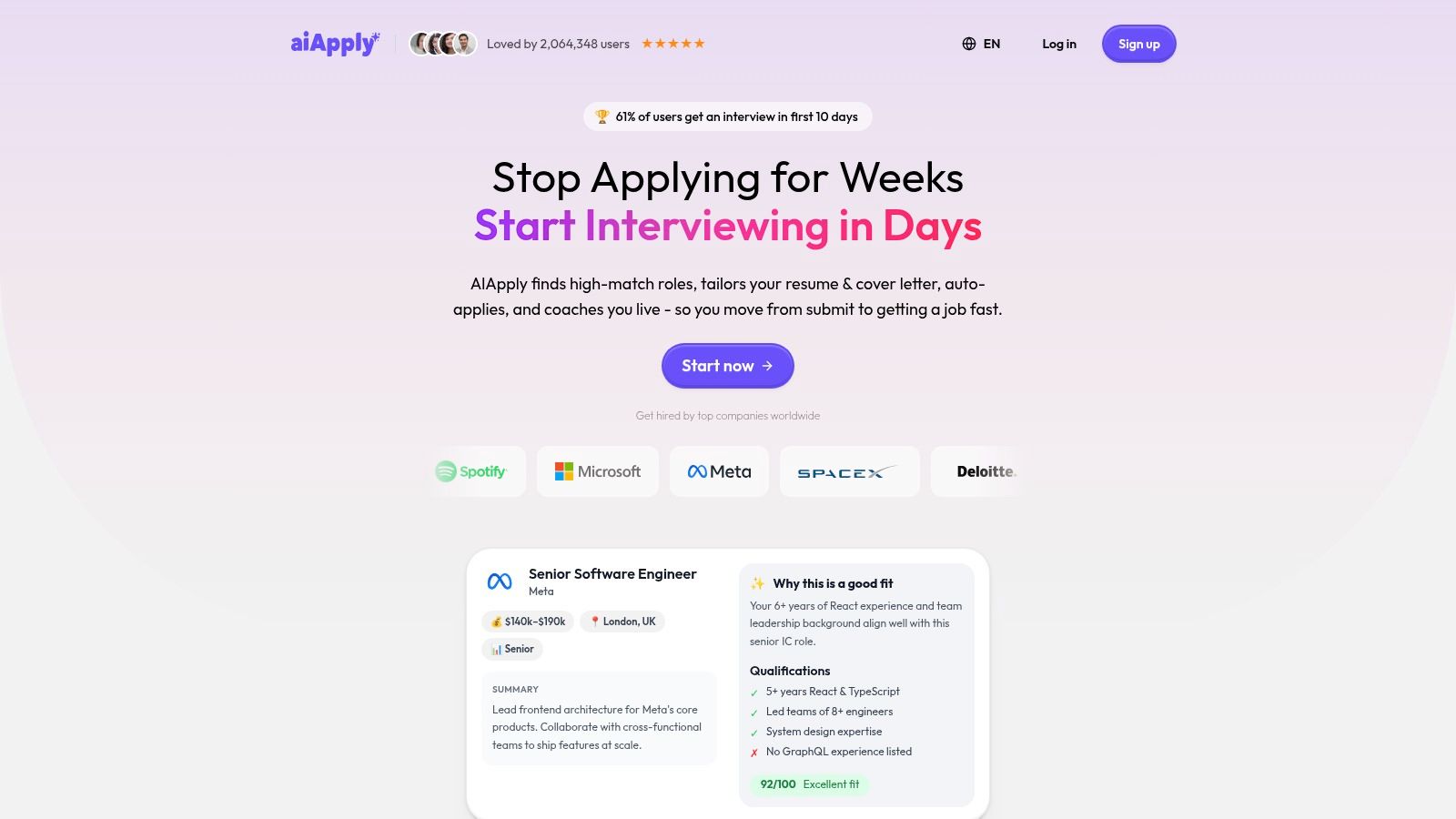
AIApply is most useful when the problem isn't a lack of experience, but a lack of translation. A developer may have improved search architecture, a freelancer may have delivered several client projects, and an agency lead may have coordinated technical work across teams. Yet the resume can still reduce all of that to “worked on websites” or “managed projects.”
The platform brings together tools for generating resumes, cover letters, follow-up emails, interview practice, and application support. Its relevance to resume bullet points is straightforward: it can help turn a rough responsibility into a clearer achievement statement, then adapt that statement to a particular vacancy. The useful output isn't the first AI-generated sentence. It's the faster starting point and the opportunity to compare your experience with the language used in a target job description.
For example, a weak bullet might say:
Responsible for improving the Code Market product catalog.
A more useful draft would be:
Optimized product taxonomy across WordPress, Flutter, and PHP categories, connecting search behavior to clearer category paths and stronger product discovery.
That version still needs evidence. If you verified a change in search exits, product-detail visits, or browsing time, add the result. If you didn't track an outcome, retain the scope and method rather than inventing precision.
What the platform solves
AIApply can help when you're dealing with:
- Blank-page friction: Turn project notes into several possible bullet structures that you can fact-check and rewrite.
- Role mismatch: Reframe the same experience for product, SEO, engineering, growth, or operations roles without changing the underlying truth.
- Interview preparation: Practice explaining the action, method, and result behind each bullet instead of memorizing polished wording.
- Application repetition: Create a consistent base resume while tailoring selected bullets to the vocabulary of each job.
The platform is a good choice for recent graduates who need help identifying transferable evidence, and for experienced professionals whose resumes have grown into dense lists of responsibilities. It isn't a substitute for analytics, manager feedback, or your own records. You still need to confirm every tool, scope statement, outcome, and keyword.
A field experiment covering nearly half a million jobseekers found that concise, structured bullet points were associated with an 8% improvement in hiring odds, as reported by Resume Thrive's resume statistics guide. That supports using AI for structure and iteration, but not for manufacturing achievements.
For a practical starting point, review AIApply's resume bullet formula, then rewrite the suggested language in your own voice. Use the platform when you need speed, comparison, and practice. Choose another approach when your experience is highly confidential or requires careful human interpretation before it can be described safely.
2. Increased Catalog Discoverability Through Taxonomy Optimization
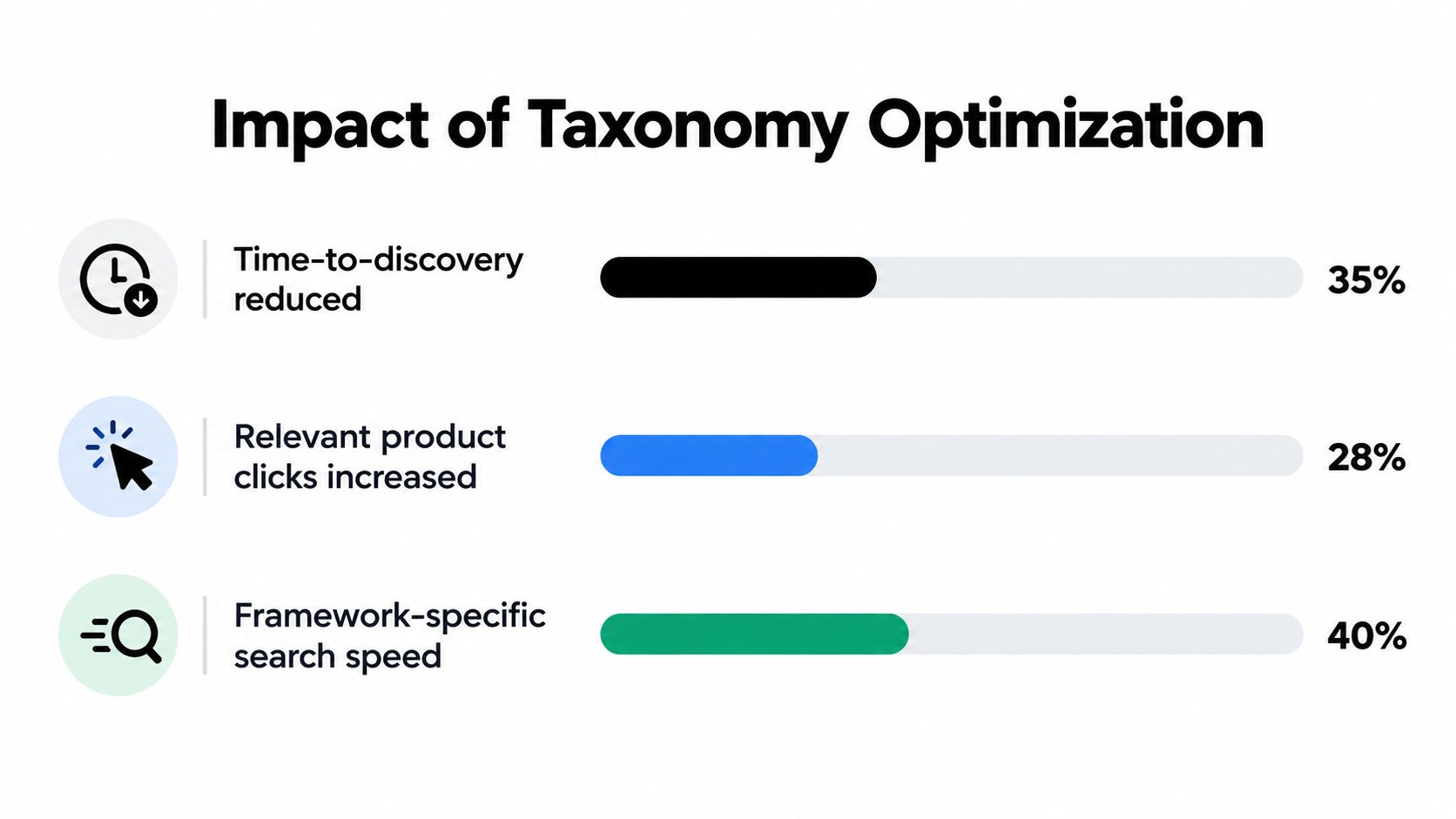
A taxonomy bullet should prove that structure changed how people found products. “Organized categories” describes an assignment, not its value. For a marketplace such as Code Market, the evidence may include connections between broad categories and specific needs, including WordPress plugins, Flutter ecommerce apps, Perfex CRM modules, IPTV integrations, or Unity projects.
A strong example reads:
Designed hierarchical categories and granular tags for WordPress, React, Flutter, IPTV, and CRM products, linking framework, platform, and industry intent to reduce navigation friction and improve product findability.
The verb designed signals ownership. The scope appears in the range of frameworks, platforms, and product types. The method is visible through hierarchical categories and granular tags. Supporting evidence might include breadcrumbs, faceted filters, search refinements, documentation, or governance rules. The result belongs at the end only when analytics can verify it, such as increased product-detail visits, changed search-refinement behavior, or greater browsing depth. Without those figures, describe what you implemented rather than implying a performance lift.
Read the line as compact evidence
The line carries clear ATS signals:
- Information architecture: Identifies the discipline behind the work.
- Taxonomy and tagging: Names the systems improved or created.
- Search refinement: Connects catalog structure with user behavior.
- Product discovery: States the business purpose in familiar terms.
- Framework and platform terms: Shows the technical range of the inventory.
A weak alternative, “Managed website categories and improved SEO,” sounds credible until you ask what changed, across which products, and by what method. It combines taxonomy, search, and SEO into one broad claim. The stronger version gives a recruiter terms to match and questions to verify.
Taxonomy also involves operating scope. Deeper structures can improve discovery while increasing maintenance work as new templates, scripts, and verticals enter the catalog. A bullet can show that judgment:
Maintained category and tagging rules across fast-changing code inventories, balancing niche product visibility with consistent navigation and search terminology.
Here, maintained fits an ongoing ownership role, while “fast-changing code inventories” communicates complexity. If records confirm a business result, add it with a clear source in your own files. If they do not, use scope, update frequency, or rule complexity as evidence. Code Market's guidance on how changing one word can affect AI ranking reinforces why precise wording matters in discoverability work.
A junior candidate can emphasize implementation and documentation. A senior information architect should show governance, stakeholder alignment, search behavior, and the decisions that shaped the structure.
3. Revenue, Conversion and Pricing Optimization
A revenue bullet should not begin with revenue. It should begin with the decision that shaped the result. A product page works like a small sales system: price, metadata, screenshots, recommendations, promotions, and calls to action can change together. Because multiple variables move at once, claiming that one experiment produced the entire commercial outcome can weaken your credibility.
Start with the intervention:
Optimized digital product pages through CTA testing, technical metadata, social proof, and related-product modules, using product type and framework context to support clearer purchase decisions.
This line works without a percentage because it names the levers, the marketplace setting, and the intended customer decision. Add a result only when your records support it:
Tested product-page layouts and pricing messages for [product segment], improving [verified conversion metric] from [baseline] to [result] while maintaining [relevant quality or revenue measure].
Replace each bracket with evidence from an analytics system, experiment record, or financial report. A conversion figure should document the work, not decorate the bullet.
Read the line as evidence
A credible pricing or conversion bullet connects at least two signals:
- Experiment design: A/B testing, controlled comparison, or documented iteration.
- Merchandising context: Product type, framework, vertical, or customer segment.
- Page mechanics: CTA placement, image galleries, specifications, ratings, or recommendations.
- Commercial outcome: Conversion, average order value, units sold, revenue, or margin.
- Decision quality: A reason for changing the price, tier, promotion, or offer structure.
These details function like labels on a case file. They let a hiring manager see what changed, where it changed, and how the team judged the outcome.
Choose the verb according to your contribution. Led signals ownership of the work. Analyzed suits a research-heavy role. Implemented shows execution. Recommended fits a role where another team approved or applied the final change. The verb is evidence too, so it should not claim authority you did not have.
Pricing also demands context. A discount can raise order volume while reducing margin. A subscription option can improve access for some customers while confusing others. “Increased revenue” alone leaves out the tested mechanism and the other teams involved.
Practical rule: If you cannot explain what changed, what you compared, and how the result was measured, describe the intervention instead of claiming causation.
4. Expanded Product Catalog Coverage and Vertical Market Penetration
Catalog expansion is not proven by a longer product list. It is proven by the judgment behind the list: which customer needs you researched, which suppliers you evaluated, and which standards products had to meet before publication.
For an associate or coordinator, the evidence may be research and review work:
Analyzed underserved developer and maker use cases, categorized product submissions across mobile, web, gaming, streaming, and CRM, and verified fit before publication.
This line shows scope without claiming ownership of the entire expansion. Its verbs, analyzed, categorized, and verified, match supporting responsibilities. Its ATS signals include market research, product curation, quality assurance, and category expansion.
A specialist who worked with suppliers could show a different contribution:
Evaluated vendor submissions and organized product coverage for WordPress, Flutter, Unity, and PHP ecosystems, applying usability, documentation, compatibility, and code-integrity checks.
The evidence is more specific than “added products.” It identifies the ecosystems reviewed, the sourcing activity, and the quality gates. If you recorded product counts or category growth, add those figures only when your records support them. Otherwise, the named ecosystems and review criteria provide credible scope.
A manager or lead can emphasize portfolio decisions:
Directed category expansion into niche developer and maker use cases, prioritizing vendor sourcing, product QA, and category-page optimization around demand signals and audience fit.
Directed signals authority, while prioritizing explains the decision process. Use those verbs only if you set the direction or approval standards. Someone who recommended the plan should write analyzed, proposed, or supported instead.
Use this editing test for every version:
- Scope: Which verticals, ecosystems, or customer problems did the work cover?
- Evidence: Did you research demand, contact vendors, assess submissions, or maintain approval criteria?
- Quality: How did you check usability, documentation, compatibility, or code integrity?
- Discovery: Did category pages, internal links, or supporting content help users find the new inventory?
- Outcome: Do verified records show broader coverage, stronger qualified demand, or another business result?
A bullet should connect expansion to a clear purpose. It might show that you filled gaps in a product portfolio, created a repeatable review process, or improved coverage for a defined technical audience. Avoid claiming market penetration when you only know that listings were published. The strongest line acts like a compact case file: it names the decision, the work, the boundaries, and the evidence a hiring manager could verify.
5. Reduced Time-to-Market for Customers Through Ready-Made Starter Templates
This bullet translates technical inventory into customer value instead of just stating that a product exists. A template, script, or starter codebase matters when it gives a developer or agency a usable foundation and reduces repetitive setup before customization begins.
A clear version could say:
Positioned production-ready templates, scripts, and starter codebases as alternatives to greenfield development, helping developers and agencies accelerate project setup across web, mobile, and software use cases.
The evidence here is qualitative. Project complexity, developer skill, customization, and code quality all affect the result, so the line avoids promising the same time reduction for every customer. A quantified version needs customer feedback, usage data, or a documented comparison:
Compared template-assisted and from-scratch implementation paths for [project type], documenting verified time saved while assessing code quality, security, and maintainability.
“Time saved” needs a defensible basis. If you observed one project or received informal feedback, describe that scope rather than claiming that every customer reaches launch faster. Treat the bullet like a compact case file: identify the implementation paths, conditions, technical checks, and evidence supporting the result.
Show technical judgment, not just speed
A manager, technical lead, or product specialist can tailor the emphasis to the work they performed. A technical evaluator might write:
Evaluated ready-made Flutter and PHP solutions for deployment requirements, documentation quality, and customization effort, helping agencies select viable foundations for client builds.
That line communicates technical judgment without claiming an unverified time reduction. It also gives hiring managers searchable terms such as Flutter, PHP, deployment, documentation, customization, and client builds. Use those terms when they accurately describe the products or review criteria you handled.
Check four dimensions before finalizing the bullet:
- Architecture: Did the codebase provide a working foundation, or only a visual shell?
- Compatibility: Which stack mattered, such as Flutter, React, WordPress, PHP, Node.js, or Unity?
- Maintainability: Were documentation, modularity, update practices, or integration effort part of the assessment?
- Customer context: Was the buyer an indie maker validating an idea or an agency delivering a client project?
The catalog connects codebases, themes, modules, scripts, and operational tools with different technical audiences. For a related explanation of ready-made and custom work, see Code Market's comparison of website templates and custom design.

6. Improved Customer Retention and Lifetime Value Through Content and Support Resources
“Managed the blog and newsletter” records activity, not customer behavior. A stronger bullet shows how content helped people discover products, evaluate fit, start using them, return, or resolve questions without assistance.
Use a line such as:
Built blog, newsletter, documentation, and community resources around React, Next.js, Flutter, Unity, and marketplace workflows, helping customers discover relevant products and use them with less setup friction.
Read the bullet as compact evidence. Built identifies the contribution. The channels and technical subjects establish scope. The catalog and its technical audiences provide context. Helping customers discover products and use them with less setup friction states the intended outcome without claiming an unsupported retention result.
The best version depends on the job. A content strategist might emphasize editorial planning, search intent, segmentation, and distribution. A customer-success candidate could focus on onboarding documentation, customer education, and issue resolution. A product marketer may connect content with positioning and conversion. The same resource system can therefore support different bullets, provided each one reflects the candidate's actual responsibility.
For a role with reliable reporting, use a measurement-focused version:
Segmented product newsletters and improved onboarding documentation for [audience], increasing [verified engagement or repeat-purchase measure] while reducing [verified support issue or onboarding friction].
Replace the brackets only with results you can trace to a credible record. Content works like a chain of touchpoints, so one article or email cannot automatically receive credit for every later purchase. Use an attribution method that matches the available evidence.
Show the customer journey
Choose the job the content performed:
- Discovery: Blog posts and category content explain available solutions.
- Evaluation: Tutorials, comparisons, and technical specifications help buyers assess fit.
- Activation: Setup guides and FAQs help customers begin using a product.
- Retention: Newsletters, updates, and community resources give customers reasons to return.
- Support efficiency: Clear documentation answers recurring questions before they become tickets.
This framing also improves ATS alignment. Terms such as content strategy, editorial planning, onboarding, documentation, segmentation, search intent, customer education, and issue resolution should appear only when they describe your work. For assisted production, AI tools for content generation may be relevant, but the bullet still needs your editorial judgment, review process, and audience understanding.
Avoid claiming that content “drove loyalty” unless loyalty was measured. Describe the system you created, the customer behavior it supported, and the evidence connecting your work to that behavior.
7. Enhanced Product Quality and Developer Confidence Through Code Auditing and Vetting Processes
Quality assurance bullets become credible when they show what you checked. “Ensured high-quality code” makes a claim. “Reviewed dependencies, documentation, architecture, and platform compatibility before publication” identifies the evidence behind it.
Established code-review, security-scanning, and compatibility checks for submitted products, evaluating dependencies, documentation, architecture, and target-platform behavior before catalog publication.
This bullet fits a process owner, but the same work can be framed for different seniority levels. A junior reviewer might write:
Applied code-review checklists to assess documentation, dependency risks, and compatibility across submitted WordPress, Flutter, and Node.js products.
A senior candidate can emphasize governance:
Designed product-vetting standards that combined automated security checks, manual review, compatibility testing, and public quality signals for a multi-framework catalog.
Put trust into observable terms
Useful evidence may include audit coverage, findings, review turnaround, rejection reasons, remediation rates, or customer feedback. Use these details only when records are real and your contribution is clear. If confidentiality limits disclosure, describe the control and the risk it addressed.
The strongest bullet works like a compact audit trail. It names the scope, the action, and the reason the work mattered. Code review shows inspection, while dependency scanning points to a specific risk-control activity. Vulnerability assessment, QA, compatibility testing, secure development, documentation standards, and release criteria can strengthen ATS alignment when they accurately describe the process.
A keyword list alone can resemble stuffing. Connect each term to an action, such as checking package risks, testing supported platforms, or defining publication requirements.
The work also involves judgment. Vendors may resist rejection or revision requests, and reviewers need consistent criteria across languages and frameworks:
Standardized review criteria for WordPress, Flutter, PHP, and Node.js submissions, giving vendors actionable feedback while protecting catalog quality and buyer confidence.
Do not claim that a quality process eliminated risk. Reviews cannot catch every defect, and compatibility changes over time. Precise wording is more persuasive because it shows what the control covered and where its limits remained.

8. Cross-Category Discoverability and Bundle Sales Growth Through Intelligent Product Recommendations
Recommendation work combines product thinking, data, merchandising, and user experience. The resume bullet should make that combination visible instead of reducing the project to “built a recommendation engine.”
A useful example is:
Developed cross-category recommendations that connected complementary mobile, backend, and admin products, helping developers assemble more complete solutions from a fragmented catalog.
The context is clear. The action is developed. The evidence is the relationship between complementary products. The impact is expressed as discoverability and solution assembly, not an unsupported revenue claim.
If you owned experimentation, make that visible:
Tested recommendation placement and messaging for framework- and platform-related products, refining contextual bundles around complete application workflows.
If you worked primarily on strategy rather than engineering, use:
Defined bundle logic for Flutter, PHP, and admin products by mapping shared frameworks, platforms, and project needs to relevant cross-sell opportunities.
Match the verb to the system
Recommendation bullets need accurate technical language:
- Collaborative filtering suggests patterns based on user behavior or purchase history.
- Content-based recommendations suggest products through shared attributes such as framework, platform, or vertical.
- Contextual bundles organize complementary products around a practical solution.
- A/B testing indicates that placement or messaging was compared rather than changed casually.
Don't use algorithmic terminology unless you worked with that method. A merchandiser who curated bundles shouldn't claim to have trained a recommendation model. Conversely, an engineer should name the data and evaluation work rather than calling the project “smart recommendations.”
The limits matter too. Sparse transaction history can make recommendations unreliable, and poor pairings can distract users. A strong bullet can show that you monitored relevance, reviewed edge cases, or adjusted rules across different product types.
Evidence might include attachment rate, average order value, recommendation clicks, or conversion. Use only verified internal metrics. Without them, describe the system design, product relationships, and testing process. That still demonstrates the ability to connect a deep catalog to practical user journeys.
9. SEO and Organic Traffic Growth Through Category Hub Optimization and Content Strategy
SEO bullets fail when they state a result without naming the work behind it. “Improved rankings through SEO” lacks specificity. Hiring managers need to see whether you handled keyword research, category hubs, product pages, internal links, content, schema, or authority building, and how those activities supported search intent and site architecture.
A credible strategy-level example might read:
Optimized category hubs, product pages, and developer-focused content around framework, platform, and vertical use cases, strengthening internal links between broad searches and specific code listings.
This bullet supplies evidence through the verb Optimized, identifies the scope of the work, and shows how broad topics connected with individual products. It also includes natural ATS terms such as keyword research, category pages, product-page SEO, internal linking, schema markup, search intent, and content strategy when those activities reflect the role.
A more operational version is:
Created search-led category and product-page briefs covering titles, descriptions, technical specifications, structured data, and internal-link paths for web, mobile, gaming, and SaaS resources.
Here, Created signals execution, while the list of deliverables gives the reader something concrete to evaluate. The right verb depends on the function and level. A junior specialist might describe researching and drafting briefs. A senior SEO lead could describe prioritizing topic clusters, coordinating implementation, and measuring performance. A product manager might focus on catalog coverage and demand. A developer might name templates, schema, rendering, performance, and maintainable page systems.
Avoid the ranking shortcut
Search performance depends on competition, technical health, content quality, authority, indexing, and time. Publishing a page alone does not prove a ranking improvement. Verified Search Console, analytics, or rank-tracking data can support a measured outcome, with the relevant period recorded in your private records. Without that evidence, describe the completed work and the search problem it addressed.
A category hub organizes a broad theme such as Flutter apps or WordPress plugins. A product page answers a narrower evaluation question, including compatibility, deployment requirements, features, documentation, and use case. Internal links connect these levels, helping users and crawlers move from a general need to a specific solution.
The strongest bullet makes the evidence chain visible: what people searched for, which destination you built, how you connected it to relevant products, and what verified result followed.
9-Example Resume Bullet Comparison
| Item | Implementation complexity | Resource requirements | Expected outcomes | Ideal use cases | Key advantages |
|---|---|---|---|---|---|
| AIApply | Low for users, high for platform engineering | Subscription, user input (resume/roles), moderate setup time | Automates applications, higher interview readiness and application volume | Job seekers (graduates to experienced), high-volume applicants | AI-generated resumes/letters, interview practice, automation and personalization |
| Increased Catalog Discoverability (Taxonomy Optimization) | Moderate–high (designing hierarchies & filters) | Analytics, taxonomy managers, ongoing maintenance | Faster product discovery, higher relevant clicks and engagement | Large, diverse product catalogs with deep niche items | Improved findability, reduced navigation friction, measurable discoverability gains |
| Revenue, Conversion & Pricing Optimization | High (A/B tests, pricing experiments) | Testing infrastructure, analytics, product/UX resources | Higher conversion rates, increased AOV and revenue | Marketplaces or stores focused on monetization and segmentation | Direct revenue impact, data-driven pricing, better product positioning |
| Expanded Product Catalog Coverage | Moderate (sourcing & onboarding workflows) | Vendor outreach, QA, market research, SEO alignment | Larger addressable market, increased category traffic and revenue | Growth-stage marketplaces seeking broader verticals | Greater market reach, diversified product offerings, new revenue streams |
| Reduced Time-to-Market (Starter Templates) | Low–moderate (curation and documentation) | Template QA, docs, customer examples, support | Faster project launches for customers, measurable time/cost savings | Freelancers, agencies, teams needing rapid MVPs | Significant time savings, higher customer productivity, clear ROI examples |
| Improved Retention & LTV (Content & Support) | Moderate (ongoing content & community) | Content creators, support staff, community management | Higher repeat purchases, lower churn, improved LTV | Marketplaces aiming for repeat buyers and organic growth | Increases LTV, builds trust, adds organic acquisition via content |
| Enhanced Product Quality (Code Audits & Vetting) | High (security & manual reviews) | Security tooling, expert reviewers, compatibility testing | Fewer vulnerabilities, higher buyer confidence, lower post-sale issues | Security-sensitive customers and agencies | Risk reduction, trust signal, differentiated vetted inventory |
| Cross-Category Discoverability & Bundles | High (recommendation engines & rules) | ML/data science, transaction data, engineering effort | Increased bundle attachment, higher AOV and revenue per customer | Diverse catalogs where complementary products exist | Boosts AOV, assembles complete solutions, improves cross-sell discovery |
| SEO & Organic Traffic Growth | Moderate (technical + content work) | SEO specialists, content creators, time (months) | Sustainable organic traffic growth, improved conversions from search | Marketplaces relying on search-driven discovery | Cost-effective acquisition, long-term traffic and authority gains |
Turn Every Line Into Verifiable Evidence
A resume bullet earns its place when a stranger can understand what you did, why it mattered, and how much confidence to place in the claim. Start with the target role, not with your old resume. Read the job description and identify the repeated terms, tools, responsibilities, and outcomes. Then choose the experience that proves those requirements instead of trying to preserve every task from every position.
Career-center guidance from Yale recommends a pattern built around an action verb, scope, and quantified result, with examples such as percentages, dollar values, time saved, or volume handled, as explained in Yale's guidance on impactful resume bullets. Treat that pattern as a reasoning tool, not a demand to force a number into every line. A recent guide on quantifying resume achievements makes the useful distinction that numbers should reflect real scale, improvement, speed, or frequency. If a metric doesn't clarify the work, leave it out.
Use this editing workflow for each bullet:
- Identify the target: Mark the job description's most relevant skills, tools, business problems, and deliverables.
- Choose the action: Replace “responsible for” or “worked on” with a verb that reflects your actual ownership, such as analyzed, implemented, audited, coordinated, optimized, or documented.
- Add context: Name the product, platform, audience, process, or environment. “Improved categories” is weaker than “structured Flutter, WordPress, and PHP product categories.”
- Show the method: Explain how you worked, such as through taxonomy rules, A/B testing, security scanning, customer research, or internal linking.
- Verify the result: Add a measured outcome only when you can support it with an analytics record, experiment log, customer report, project document, or other reliable evidence.
- Cut filler: Remove adjectives such as “excellent,” or “hardworking” unless the bullet proves them through an observable action.
- Compare the line: Check whether the final wording mirrors the job's terminology naturally without copying the posting.
ATS alignment doesn't mean repeating keywords until the bullet becomes unreadable. Current resume guidance emphasizes standard bullets, consistent dates, natural keyword placement, and simpler formatting because decorative symbols and complex layouts can interfere with parsing, as discussed in the University of North Carolina Charlotte's ATS resume guide. Put the important term near the action when possible, then follow it with evidence. “Audited product submissions for dependency risks and platform compatibility” is clearer than a separate keyword block that merely lists audit terms.
Your final checklist should be short and strict:
- Do: Lead with an active verb.
- Do: Include scope, method, or operating context.
- Do: Use verified metrics when they clarify impact.
- Do: Match tense across each role.
- Do: Keep punctuation and bullet formatting consistent.
- Don't: Write duty-only statements.
- Don't: Invent percentages, revenue, time savings, customer counts, or rankings.
- Don't: Use inflated verbs that exceed your actual ownership.
- Don't: Stuff keywords into a sentence that no person would say.
- Don't: Repeat the same achievement in several bullets.
Read each line aloud. If it sounds like a job description, ask what changed because you did the work. If it contains a number, ask where that number came from. If it contains a keyword, ask whether the surrounding evidence proves that you used the skill rather than merely encountering it.
The examples in this guide are frameworks, not text to copy. Replace every placeholder with your own records and adapt the scope to your seniority. Before submitting, make one final pass for clarity, consistent tense, realistic length, readable formatting, and truthful claims. Then tailor the strongest bullets to the specific role and save a version that preserves your evidence for future applications.
Take one target job description and rewrite three of your current bullets today. Mark its core keywords, choose a precise action verb, add the method, and attach only results you can verify. If you work with digital products, review your project records, analytics, tickets, and release notes first, then use Code Market to understand how technical catalog, product, and SEO work can be expressed as evidence rather than duties.
This article was inspired by Outrank.